
Fungus Among Us
Pestilence and Warfare


“The Lord will strike you with wasting disease, with fever and inflammation, with scorching heat and drought, with blight and mildew, which will plague you until you perish.”
Deuteronomy 28:22
See, the evil wrong doers tell people straight out what it is that they are going to do and how they are going to do it, one just has to keen “on their B.S.” to see it. The aforementioned bible chapter, 28th Chapter of the Book of Deuteronomy, lays out the nomenclature of this quite clearly. “Mildew,” is fungus. Fungus, inter alia, pestilence, and mildew, according to the “scripture,” will be used to punish people who “don’t fall in line.”
Think about that? People being “punished” with biological warfare. Mold, Mildew and fungi are “biological things.” Think about the wholesale “indiscriminate” injury. See, the evil wrong doers have “been knowing about fungus.” It was fungus, “Black fungus” to be exact, that I believe was the cause of Europe’s “Black Plague.” That “incident,” I believe was bio-warfare against innocents too.
As long as the evil wrong doers have been making whiskey, and alcohol, they have known about fungus, and its detriment.
“Historians believe that distillation was first developed in 2000 BC in ancient Mesopotamia (what we call Iraq and Syria today). They think the Mesopotamians used distillation to create perfumes from flowers and other ingredients. We know from written records that distillation was employed by the Ancient Greeks around 100 AD. The philosopher Alexander of Aphrodisias employed distillation to turn sea water into pure drinking water. The medieval Arabs (who were big fans of the Ancient Greeks) learned of distillation and began using it in the 9th Century AD. However, the vast majority of the distillation practiced by medieval Arabs was non-alcoholic. Interestingly, the science of distillation passed back from the medieval Arabs to the medieval Latins. They recorded details of the process in manuscripts in the early 12th century.”
“Some historians believe that the first person to use distillation to make liquor was the Arab chemist Abu Musa Jabir ibn Hayyan, who did so in 800 AD. They believe he used distillation to purify a beverage made from fermentation to discover that it created a very strong form of alcohol. The earliest record of distillation in Europe occurred in Italy in the 13th century, when a philosopher named Ramon Llull used it to distill alcohol from wine. Sometime around this period, distillation became much more common in Europe. This was largely thanks to the traveling nomads and Christian monks using distillation to make medicines for medical conditions including palsy and smallpox.”
“It is believed that distilling techniques were brought to Ireland and Scotland between 1100 and 1300 by these Christian monks. It is around this time that the first whiskeys were made. Although distillation made its way to Ireland and Scotland sometime around 1100 AD, we don’t know exactly when they began making whisky. However, farmers were probably experimenting with distillation using their excess barley sometime around this period. The first written record of the term “whisky” being used was in the Irish Annal of Clonmacnoise in 1405 AD. The book states that the head of a clan died after “taking a surfeit [excessive amount] of aqua vitae” at Christmas. As you can see, it is possible to have too much of a good thing.”
“The word ‘whisky’ comes from the Gaelic ‘uisge beatha’, or ‘usquebaugh’, which means ‘water of life’. Gaelic is a variation of Celtic spoken which was developed in the Highlands of Scotland. Another of the oldest historical references to whisky came from Mr J Marshall Robb, who wrote the book ‘Scotch Whisky’. In the book, Robb says: ‘The oldest reference to whisky occurs in the Scottish Exchequer Rolls for 1494, where there is an entry of ‘eight bolls of malt to Friar John Cor wherewith to make aqua vitae’.”
By the 16th Century, whisky was being widely consumed, particularly by the royalty. When King James IV was visiting Inverness during September 1506, his Treasurer’s accounts had entries saying ‘For aqua vite to the King…’ and ‘For ane flacat of aqua vite to the King… The number of distilleries in Ireland and Scotland quickly grew around this time. Some of the world’s oldest distilleries were established including Old Bushmills Distillery.”
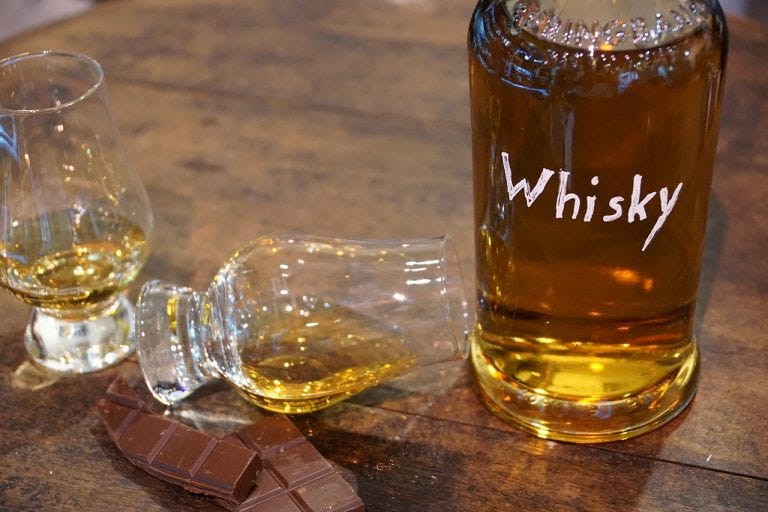
“European colonists arriving in America in the early 17th Century brought the practice of distilling whisky with them. Around this time, the Acts of Union merged the Kingdoms of Scotland and England. Taxes rose dramatically and the English Malt Tax of 1725 was introduced. This caused many Scottish distilleries to go underground. They would often produce whiskies at night, which is how the term “Moonshine” was coined. Back in the United States, “whiskey” became a form of currency, particularly during the American Revolutionary War. The first commercial distillery was established in Kentucky in 1783, by a man named Evan Williams.”
“The Americans were a bit more flexible when it came to mash ingredients and experimented with corn, wheat, and rye (all popular varieties of American whiskeys today). By the late 18th Century, excises were levied on whiskey to help pay back the debts incurred during the war. This whiskey tax was very unpopular and eventually led to violence during the Whiskey Rebellion. The rebellion was eventually resolved thanks to Thomas Jefferson repealing the tax in 1801.”
So, suffice it to say that the knowledge of fungus and its effects have been around for a very long time. Fungus and molds are very dangerous. The people who produced whiskey in Europe knew this, and that “Black whiskey fungus” was utilized as a weapon, I believe. This is what I also believe was put on some of the blankets that were given to the American Indian Tribes on this land, et.al.
“On a gray autumn morning, Kayleigh Count stands outside her home eyeing the mist curling through the trees and lazing around open spaces. For many in Kentucky, the cool dampness signals relief, the end to an unusually hot fall. Not for Count. “It’s a bad time for the stuff,” she says, pointing to the eaves and gutters of her home. They look as if they’ve been shaded in with pencil.”
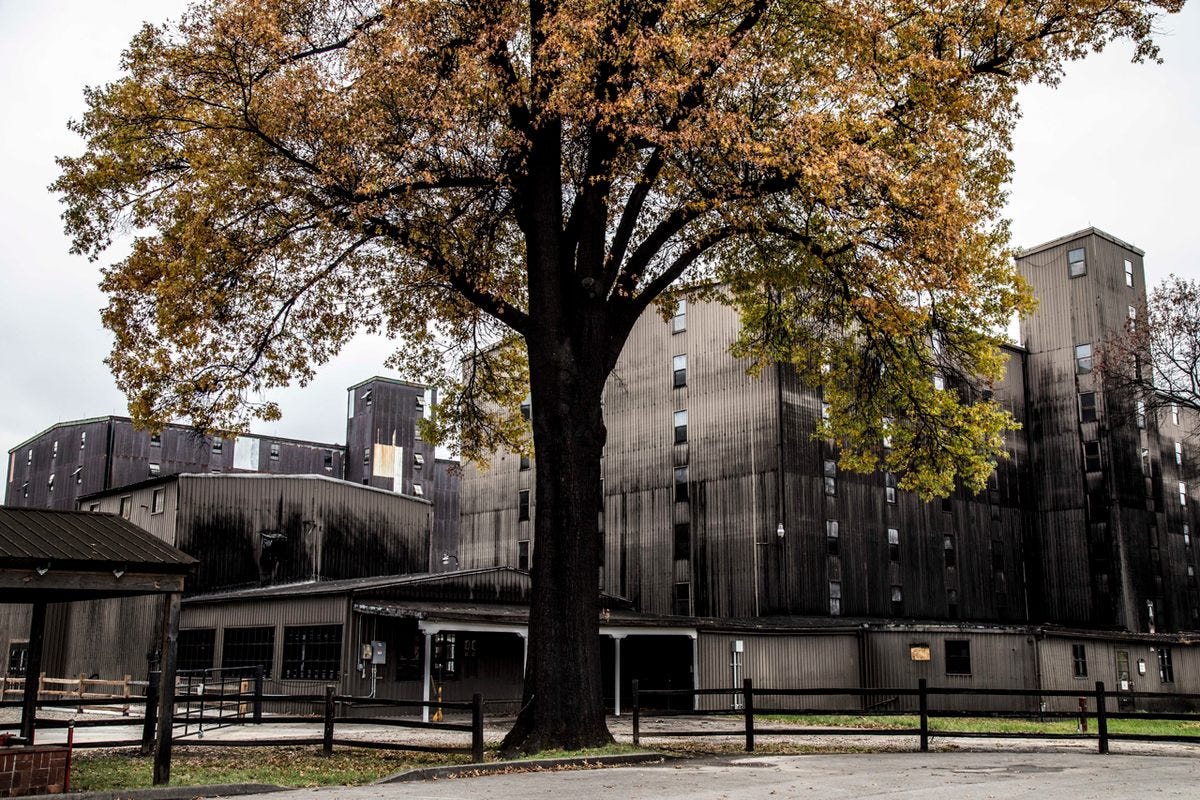
“The “stuff” is a fungus: Baudoinia compniacensis. It grows all over her neighborhood—on stop signs, porch furniture, siding, fences, basketball hoops, cars. It’s even been found growing on the dome of the Kentucky state capitol building. From a distance it looks sooty. Up close, a little like thin, black felt. Anything left untouched for years ends up a convincing burnt-to-a-crisp black.”
“Several communities in Kentucky spent years wondering why the dark film always returns, no matter how deep they clean. Count suspected it was ash from chimney smoke. Others blamed nearby factories. “I had no idea what it was,” says Bruce Merrick, owner of Dant Clayton Corp., a manufacturer of stadium seating and bleachers in Louisville, Kentucky. His business has been in an industrial section of the city for decades, so the gunk on his buildings and bleachers didn’t seem unusual. Only later did he learn that Kentucky’s beloved spirit is quietly fueling the fungus.”
https://www.atlasobscura.com/articles/what-is-whiskey-fungus
“Have you ever noticed a mysterious black substance growing on the sides of buildings or trees and wondered what it was? Well, if you’re near a distillery, you’re probably looking at Whiskey fungus. This intriguing organism thrives on the ethanol vapors released during the whiskey aging process, affectionately known as the “angel’s share.” Although whiskey fungus and distillery fungus are not harmful like black mold, they can cause aesthetic and potential property damage.”
“Whiskey fungus, scientifically named Baudoinia compniacensis, is a fascinating creature that feasts on the sugar found in ethanol emissions. These emissions can total up to an astounding 1,000 tons annually, depending on the distillery’s production volume. Distillery fungus clings to almost any surface, causing areas surrounding distilleries, such as the famed Jack Daniels whiskey site, to develop these blackened spots.”
https://bourbontrend.com/bourbon-news/whiskey-fungus-the-unseen-impact-of-distilleries/
Now, in the same way that other viral and biological “items” are augmented and “supercharged” by deliberate laboratory processes, so are molds, pollens and fungi. Even without any augmentation, they are all naturally dangerous.
“Mold and mycotoxin exposure results mainly from contaminated food and inhalation of spores. Mold spores range in their size from 3 to 40 µm allowing them to flow in the air and being inhaled by animals and humans. Spores serve as vectors for mycotoxins and are pathogenic due to allergenic and infectious properties. Irrespective of exposure route, mycotoxins are systematically bioavailable affecting different system organ classes. In immunocompetent individuals, direct allergenic, and immune modulatory effects of mycotoxins are well described and accepted. In contrast, from a clinical point of view the concept of toxic mold syndrome that might be directly caused by mold or mycotoxins is discussed controversially. Moreover, according to critical opinions there is no sufficient evidence that mold/mycotoxin exposure might directly induce autoimmune diseases.”
https://pmc.ncbi.nlm.nih.gov/articles/PMC8619365/#notes2
“For some patients, the amount of blackened tissue that needs removing is so extreme it’s impossible and they die within days. Yet Mucorales, the fungal family which causes Mucormycosis, is not one considered ‘critical’ by WHO ranking. There are four invasive fungal pathogens deemed ‘critical’ on the list, and their insidious spores can even be found in the UK. One of them, “Candida albicans”, can be found “in about half the population inside our guts,” says Dr Rebecca Drummond, Associate Professor in antifungal immunity, University of Birmingham.”
“Aspergillus, another critical priority pathogen, is in fact so widespread that most people inhale between 100 to 1000 spores every day from the air we breathe. Even the mould on bread can contain Mucor, a fungus that causes Mucormycosis. So if these threats are so prevalent, why don’t we hear about them? Scientists say it’s because those most at risk to fungal pathogens are people with weak immune systems, like patients living with HIV or on chemotherapy.”
“Most fungal infections attack people who’ve already got existing illnesses, so they’ve either got weakened immune systems or they’ve got problems with their lungs” Prof Armstrong-James says. “Because they don’t strike down the man or woman in the street, so to speak, they don’t enter into the public folklore in the same way that viruses and bacteria do.”
“As medical interventions have improved – think of advances in chemotherapy that have enabled a much greater number of cancers to be treated – there are now more people living with compromised immune systems who are vulnerable to deadly spores. Grace*, 66, has long suffered from severe asthma. Just over 10 years ago, she was diagnosed with Chronic Pulmonary Aspergillosis (CPA) and Allergic Bronchopulmonary Aspergillosis, a lung-damaging, life-threatening, condition caused by the fungus Aspergillus fumigatus – another of the WHO’s priority pathogens.”
“I’d get my children to do back patting exercises to try and loosen [the mucus], I’d be on the floor over the cushions trying to be a bit upside down.’ Scans finally revealed the extent of the infection. “One of [the doctors] said: ‘We know it’s not cancer, because [with] the amount of patches you’ve got, you wouldn’t be here,” she said, referring to the dark blotches of lung damage visible by x-ray. Cocktails of antifungal drugs made her hair fall out and damaged her liver function.”
https://www.telegraph.co.uk/global-health/science-and-disease/can-fungal-infections-be-stopped-from-taking-over-the-world/
Now, how does the average person counteract the machinations of the evil wrong doers? I mean, they have informed the people “up front,” FOR GENERATIONS, in sundry religious texts, public announcements and “injected medical therapies,” that THE INTENTION IS TO IMPEDE THE HEALTH OF PEOPLE. People who are considered, according to popular Messianic fanaticism, “farm animals.” How does a person negate the manifest, “fungus among us?”
What I do to mitigate the evil? Oil or Oregano. I take a 4 ounce bottle of pure Oil of Oregano, and I pour it into 16 ounces of Extra Virgin Olive Oil. That is enough to last awhile. It can be used topically on wounds, bites, cuts, athletes foot, rashes, in hair and it can be taken internally to combat fungal infections. It kills all known fungus and mold. It just works.
Natural healing here: https://www.youtube.com/@Drberg
“Over recent times essential oils have become very well-known for their safe and natural healing qualities. While their antiseptic and anti-inflammatory properties are widely known, their anti-fungal abilities are often overlooked. Many essential oils have been scientifically proven to contain anti-fungal properties which can help to fight off a number of common fungal complaints. We all have a certain amount of fungus and yeast in our bodies and by and large they cause no serious issues. They are typically kept in check by our body’s bacteria; however, problems may arise if certain conditions are present such as a weakened immune system.”
“Anti-fungal medication is available over the counter but these medications can often lead to nasty side effects. Your body might also build up a resistance to the prescribed medicine rendering them largely ineffective in the long term. Unsurprisingly, there is an ever-growing demand for safe, natural treatment for a number of complaints and fungal infections are no exception. Essential oils can be used safely to treat fungal infections in the knowledge that you are highly unlikely to develop any side effects and that your body will not build up any sort of immunity against them.”
“The antifungal properties of essential oils have been thoroughly researched. Studies prove conclusively that certain essential oils work as powerful antifungals. A study carried out in 2006 into the potential antifungal capabilities of 75 essential oils revealed that some oils were more effective than the popular prescription drug –Hexaconazole. The study revealed the best and most potent anti-fungal essential oils which included lemongrass, clove, thyme and geranium. Many essential oils are now known to contain powerful anti-fungal properties and the following list is not exhaustive but representative of those commonly believed to be the best treatment for fungal infections and scientifically proven to possess antifungal qualities.”
1. Clove Essential Oil
“Clove essential oil is certainly one of the best essential oils that you can use in the treatment of fungal infection. Scientific research has found it to be effective in treating at least 15 different forms of fungi which include the common complaint-candida albicans. A study carried out in 2010 (Nozaki) found that the main constituent of clove essential oil, eugenol had especially powerful effects in combating candida. Clove essential oil should be diluted in equal amounts with a carrier oil before applying it topically. Clove oil is also good for many oral health issues such as tooth infection or a toothache.”
2. Lemongrass Essential Oil
“Lemongrass essential oil has many healing properties and is used for a variety of complaints as well as to treat fungal infection. Lemongrass essential oil helps destroy internal fungal infections like ringworm and is also used for external infections such as athlete’s foot and jock itch. Research conducted in 2008 by Weber State University, Utah found that lemongrass ranked best of 91 essential oils in the treatment of MRSA, an infection caused by a staph bacterial strain.”
“More recent research published in 2014 evaluated both the anti-fungal and anti-inflammatory effects of lemongrass essential oil. Its anti-fungal effects were examined against a number of pathogenic fungi and yeasts by the diffusion method. The results were extremely positive with lemongrass essential oil showing excellent effects against Candida albicans, Aspergillus niger and Candida tropicalis fungal strains.”
“Lemongrass essential oil proved to be an effective anti-inflammatory agent in the same study and the authors concluded that lemongrass essential oil had excellent development potential for future anti-fungal and anti-inflammatory medication. The abstract can be read here Lemongrass oil is considered safe but should be diluted with a carrier oil before it is applied topically.”
3. Lavender Essential Oil
“Lavender essential oil has more medicinal benefits than you can mention and scientific research has discovered that it is potentially lethal to a variety of fungal strains including candida and dermatophytes which are responsible for common nail and skin infections. The research carried out at the University of Coimbra; Portugal demonstrates that lavender essential oils damage the cell membrane which destroys the fungal cells. If you plan to use lavender oil topically, it is best diluted first with a suitable carrier oil such as coconut or jojoba oil.” [MEN-LAVENDAR LOWERS TESTOSTERONE. WOMEN- LAVENDAR BOOST ESTROGEN LEVELS]
4. Tea Tree Essential Oil
“This essential oil is derived from the leaves of the Melaleuca plant native to Australia. Tea tree essential oil has a variety of health benefits and has been used by aboriginal Australians for centuries. According to research published in 2008, tea tree essential oil has potential to treat candida infections including vaginal candidiasis by inhibiting the replication of candida cells.”
5. Cassia Essential Oil
“Cassia essential oil offers a number of health benefits and contains antibacterial, antiviral as well as antifungal properties. When applied topically, cassia essential oil should first be diluted to at least 3 drops of carrier oil for one drop of cassia oil.”
6. Cinnamon Bark Essential Oil
“Cinnamon essential oil is related closely to cassia oil and possesses anti-fungal properties as well as anti-inflammatory, antiseptic and antimicrobial qualities. It is most often used to treat immune system complaints but it also has antifungal applications including the treatment of a variety of Staphylococcus strains. Cinnamon bark essential oil should be diluted before topical application and care should be taken when diffusing it because it is a potent oil that may cause irritation to the nasal passage. For the same reason, cinnamon bark oil should not be inhaled directly from the bottle.”
7. Thyme Essential Oil
“According to the same study, thyme essential oil could be used to effectively disinfect moldy surfaces and walls. Thyme essential oil has also been found to be effective against a range of Staphylococcus bacteria including the MRSA strain. Despite its many merits, thyme essential oil is powerful and care should be taken when using it. Thyme oil definitely needs to be diluted with a carrier oil before being applied to the skin. Even in its diluted form, thyme oil might still cause an allergic reaction so it is important to do a spot check on a small area of the skin before going any further.”
8. Geranium Essential Oil
“The delightfully aromatic geranium essential oil is commonly used in aromatherapy and is valued for its antibacterial, antioxidant and antifungal qualities. Studies have found that geranium essential oil is one of the most effective oils in treating a range of fungal infections and it is known to inhibit several fungal species. It can be used to treat athlete’s foot by adding 4 or 5 drops to a foot bath or it can be massaged into your feet twice daily but be sure to dilute it first with a carrier oil. Geranium essential oil is a useful addition to your arsenal as it is also known to inhibit a variety of bacterial strains.”
9. Oregano Essential Oil
“Similarly to thyme, oregano is probably best known for its use as a kitchen ingredient, but like thyme, it is so much more than a simple cooking herb or a popular pizza topping. Along with its many other health applications, oregano essential oil possesses powerful anti fungal properties which are deadly to many fungal infections. Research carried out by scientists in 2008 found that oregano essential oil was useful in the treatment of certain strains of candida. As well as its ability to treat yeast infections like candida, oregano essential oil can be used in the treatment of skin infections like athlete’s foot and fungal nail infections. To treat athlete’s foot, prepare a foot bath with 4 or 5 drops of oregano essential oil. Oregano essential oil can also be massaged into the affected area after diluting with a suitable carrier oil.”
10. Manuka essential Oil
“Although it is a relatively recent addition to the essential oils lists, manuka essential oil is without doubt one of the most impressive natural antimicrobial essential oils. Manuka oil also known by its scientific name Leptospermum scoparium is derived from the manuka tree indigenous to the East Cape of New Zealand. Research has proven that manuka essential oil has powerful antibacterial and anti-fungal properties that give it so many practical uses. A British study published in the year 2000 comparing the antimicrobial properties of manuka, tea tree and kanuka essential oils found that manuka had an excellent antifungal effect though not quite as strong as tea tree oil. On the other hand, the same research found that manuka had by far the strongest antioxidant and antibacterial ability of the 3 oils tested. The abstract is available to read here http://www.ncbi.nlm.nih.gov/pubmed/11114000.”
“Manuka essential oil can be used to treat a variety of conditions caused by varying strains of fungus including athlete’s foot, dandruff, toenail fungus and candida. Be sure to dilute it in your shampoo, water or a carrier oil before applying it to the skin.”
11. Rose Geranium Essential Oil
“Rose geranium essential oil is known for its uplifting aroma and its ability to treat a range of emotional disorders but recent research indicates that it also possesses powerful anti-fungal properties. The research which was published in 2014 examined both the antibacterial and anti-fungal effects of rose geranium essential oil and found that it was very active against all of the bacteria and fungi tested comparably with prescription medications. Indeed when it came to its ability against candida albicans, researchers observed a complete inhibition of fungal growth and development. The abstract is available here http://www.ncbi.nlm.nih.gov/pubmed/25671182.”
Antifungal Essential Oils for Specific Conditions
Fungal Keratitis and Cinnamon (Leaf) Essential Oil
“Fungal keratitis is an eye infection caused by a fungus that affects the cornea. Fungal species that can cause keratitis include fusarium, candida, and Aspergillus. Symptoms include redness and pain in the eye, blurred vision, sensitivity to light as well as excessive tearing and discharge from the eyes.”
“It is more common in tropical and warmer climates and can be the result of eye trauma, underlying disease, poor immune function or contact lenses. In 2006 a brand of contact lenses was withdrawn following an investigation by the CDC into a fusarium keratitis outbreak.In a very recent piece of scientific research published in 2015, a number of essential oils were tested for their ability against the Fusarium strain of fungus.”
“The oils tested included lemon, tea tree, oregano, thyme, and juniper. While all of these oils exhibited some effects, cinnamon leaf essential oil was by far the most effective against the Fusarium fungi. Tests revealed that cinnamon leaf essential oil significantly inhibited the fungal growth and was a promising safe and natural candidate for future treatments of the disease. You can read the abstract here… http://www.ncbi.nlm.nih.gov/pubmed/26227503.”
Essential Oils for Yeast Infection
“We have mentioned candida a lot with regard to the antifungal properties of the essential oils listed above. In fact, vaginal yeast infection is so prevalent that we will devote another section to it. Vaginal yeast infections are caused by a fungus called candida. The vagina usually contains a natural balance of yeast and bacteria and this is rarely a problem. Your body contains lactobacillus bacteria which retains the balance by preventing the yeast from overgrowing. When this balance is disrupted for some reason, a yeast infection is possible.”
“Vaginal itching or burning is familiar and classic symptoms that indicate a yeast infection. Yeast overgrowth may stem from a pregnancy, diabetes or an immune system that is impaired. Fortunately, essential oils offer a natural and safe remedy for a yeast infection like candida and many of the oils that we have already mentioned can treat candida symptoms very effectively.”
Bio-film is why Candida is such a problem
“Candida is a particularly stealthy form of yeast infection because it is able to build a strong and slimy substance to protect itself called a biofilm. Biofilm is an especially tough slime which is the perfect home for candida and other parasites and microbes. When candida colonies form they produce even more biofilm which protects the fungus and nourishes it enabling it to grow further. Within the body, the candida biofilms can actually even prevent the most powerful anti-fungal medicines from reaching the fungus which makes candida very tricky to treat by conventional means.”
“The good news is that certain essential oils can effectively break through this tough bio-film and help treat the candida yeast infection. A study which was published in 2012 found that lemongrass essential oil and clove essential oil were particularly effective. (1)”
“As well as lemongrass and clove essential oils, there are several other essential oils that are extremely effective against candida yeast infections. They include the following essential oils:
Tea tree essential oil which is a very potent oil which is effective against various yeast infections. Ample evidence exists that this native Australian oil is especially effective against candida. Be careful with tea tree oil as it is especially potent and must not be used internally.
Thyme Essential oil is one of the very best essential oils when it comes to treating stubborn yeast infections. Studies put it among the 3 best essential oils when dealing with yeast conditions.
Oregano essential oil was actually found to be the most effective of all the essential oils tested against candida. If you can only afford a single oil then this is probably your best choice.
Cinnamon essential oil is yet another essential oil with the ability to treat your candida yeast infection.
Essential Oils for Toenail Fungus
Toenail fungus is a very common fungal infection that can be quite stubborn and difficult to treat. Fortunately, a number of essential oils appear to be very effective against toenail fungus. The best choices include :
Tea tree essential oil
Thyme essential oil
Manuka essential oil
Oregano essential oil
Clove essential oil.
“For a detailed article about the best essential oils for toenail fungus and how to use them, click on the following link. 11 Science Based Essential Oils for Toenail Fungus.”
Precautions When Using Essential Oils
“There is no doubt that essential oils can help treat a wide range of conditions including fungal and yeast infections. Having said that, they still need to be treated with respect. Essential oils are extremely powerful plant extracts and when used incorrectly can cause unwanted side effects.
Never ingest essential oils unless you are under the supervision of an expert. Ingestion of essential oils can cause toxicity.
Most essential oils can be applied topically as long as they are diluted before you use them. You should either dilute them in water or in a suitable carrier oil. Potential carrier oils include jojoba, coconut oil and sweet almond oil but there are plenty of others to choose from. Applying essential oils ‘neat’ to the skin can cause an allergic reaction.
Even after diluting your essential oil, you should [perform a patch test on a discrete area of skin before going ahead and applying a larger dose.
Not all antifungal essential oils will be effective against all types of yeast and fungus. Your choice of oil will depend on the fungus you are trying to treat. Do your research carefully and consult an expert before making your choice.
If the fungal infection does not clear up after treatment with essential oils, it is recommended that you speak to your doctor.
Frequently Asked Questions
Which essential oils kill fungus?
Studies have found that a number of essential oils can kill fungus and yeast. Some of the most effective include clove essential oil, lemongrass, tea tree, lavender, cinnamon bark and thyme essential oils. [OREGANO IS #1]
Does peppermint oil kill fungus?
A study published in 1998 looked at the effects of essential oil on 12 different types of fungus. The researchers found that peppermint oil was effective against 11 of the 12 types of fungus it was tested against. Moreover, the same study found that peppermint oil was effective against a number of bacterial strains. (2)
What essential oils kill toenail fungus?
A variety of essential oils have a proven ability to kill toenail fungus. Some of the very best include tea tree oil, lemon oil, oregano oil, thyme oil and cinnamon essential oil. Simply apply your chosen oil to the affected area several times a day and you should start to see positive results.”
(1) Mohd Sajjad Ahmad Khan, Iqbal Ahmad. Biofilm inhibition by Cymbopogon citratus and Syzygium aromaticum essential oils in the strains of Candida albicans. Journal of Ethnopharmacology. 27 Mar 2012; 140 (2): 416-423. DOI: 10.1016/j.jep.2012.01.045.
(2) https://www.ncbi.nlm.nih.gov/m/pubmed/11366554/
https://healthyfocus.org/the-9-most-powerful-antifungal-essential-oils/
Natural healing here: https://www.youtube.com/@drjoshaxe
So, the point being? A person can play around with the “assassins in white coats” if they wish, or they can take a lesson from holistic doctors and people who have a natural approach to healing. No needles, no pills, just natural substances that were here long before the evil wrong doers were.
Lord have Mercy
For anyone interested, I will be starting a NATURAL MEDICINE AND HEALING BLOG on Substack soon.
I just had my beloved Carl Marvin take a shot of whiskey in honor of your article!!! 🥃